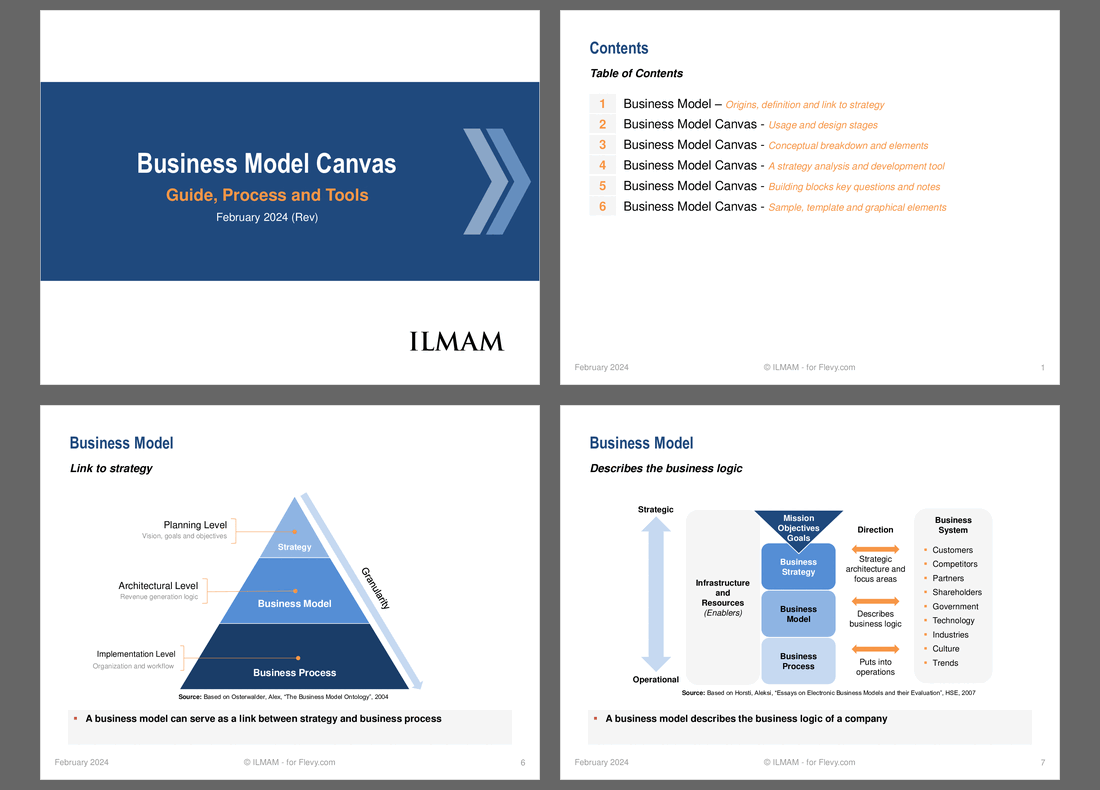

Provides an overview of the business model canvas including links to strategy analysis and development
Offers a guidance on reviewing an existing business model or creating a new one
Includes tools and templates to facilitate an effective and efficient business model canvas design exercise
BUSINESS MODEL CANVAS PPT DESCRIPTION
Editor Summary
Business Model Canvas: Guide, Process and Tools is a 43-slide PowerPoint presentation by ILMAM - Strategy & Management Consulting presented in a McKinsey/Bain/BCG-style (consulting-grade; not affiliated).
Read moreIt covers the Business Model Canvas origins, the nine building blocks, design stages (mobilization, understanding, designing, implementing, managing), and links to strategy. Deliverables include a Business Model Canvas template, Value Proposition Canvas, SWOT analysis framework, sample business model examples, graphical sticky-note elements, and workshop guidelines. Target users include corporate strategists, business development executives, consultants, product managers, and entrepreneurs. Available on Flevy with immediate digital download.
Use this deck when an organization needs to describe, redesign, validate, or communicate a business model—typical triggers include strategic planning, innovation workshops, competitor analysis, or onboarding new leaders.
Corporate strategists mapping interdependencies between revenue streams and cost structure during annual strategy reviews.
Consultants facilitating client workshops to draft and test alternative business models using visual templates.
Product managers aligning value propositions to specific customer segments and channels during product strategy sessions.
Entrepreneurs iterating on go-to-market and revenue assumptions after market feedback.
The deck’s staged design process (mobilization → understanding → designing → implementing → managing) reflects a phased, hypothesis-driven approach used in McKinsey/Bain/BCG-style strategy work.
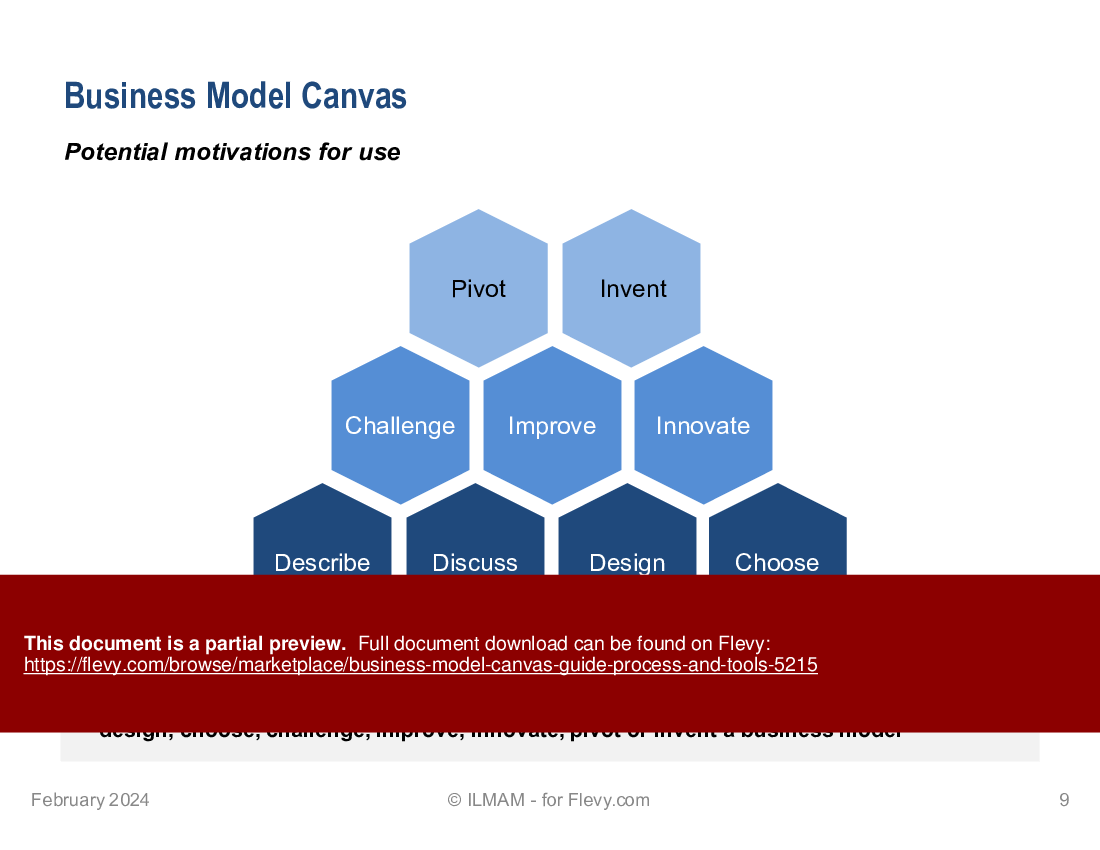
The Business Model Canvas is a versatile tool that can be used to describe, discuss, design, choose, challenge, improve, innovate, pivot or invent a business model.
The document provides an overview of the business model canvas and how it links to strategy analysis and development. It offers guidance on reviewing an existing business model or creating a new one and includes tools and templates to facilitate an effective and efficient business model canvas exercise.
Contents
1. Business Model: Origins, definition and link to strategy
-Origins
-Definition
-Is not strategy
-Link to strategy
-Describes the business logic
2. Business Model Canvas: Usage and design stages
-Potential motivations for use
-Potential business applications
-Design Stages
3. Business Model Canvas: Conceptual breakdown and elements
-The nine building blocks of the canvas
-The two sides of the canvas
-The three business model components
-Linked to the business model definition
-Business model patterns
4. Business Model Canvas: As a tool for strategy analysis and development
Business Model Canvas
-Understanding the environment
-Applying a SWOT analysis
-Blended with Blue Ocean strategy
-Link to a business plan
5. Business Model Canvas: Building blocks key questions and notes
-Key Questions
Business Model Canvas
-Customer Segments
-Value Proposition Canvas
-Value Proposition Canvas ? alignment
-Value Proposition Canvas ? summary slide
-Value Propositions
-Distribution Channels
-Customer Relationships
-Revenue Streams
-Key Resources
-Key Activities
-Key Partnerships
-Cost Structure
6. Business Models Canvas: Sample, template and graphical elements
Business Models
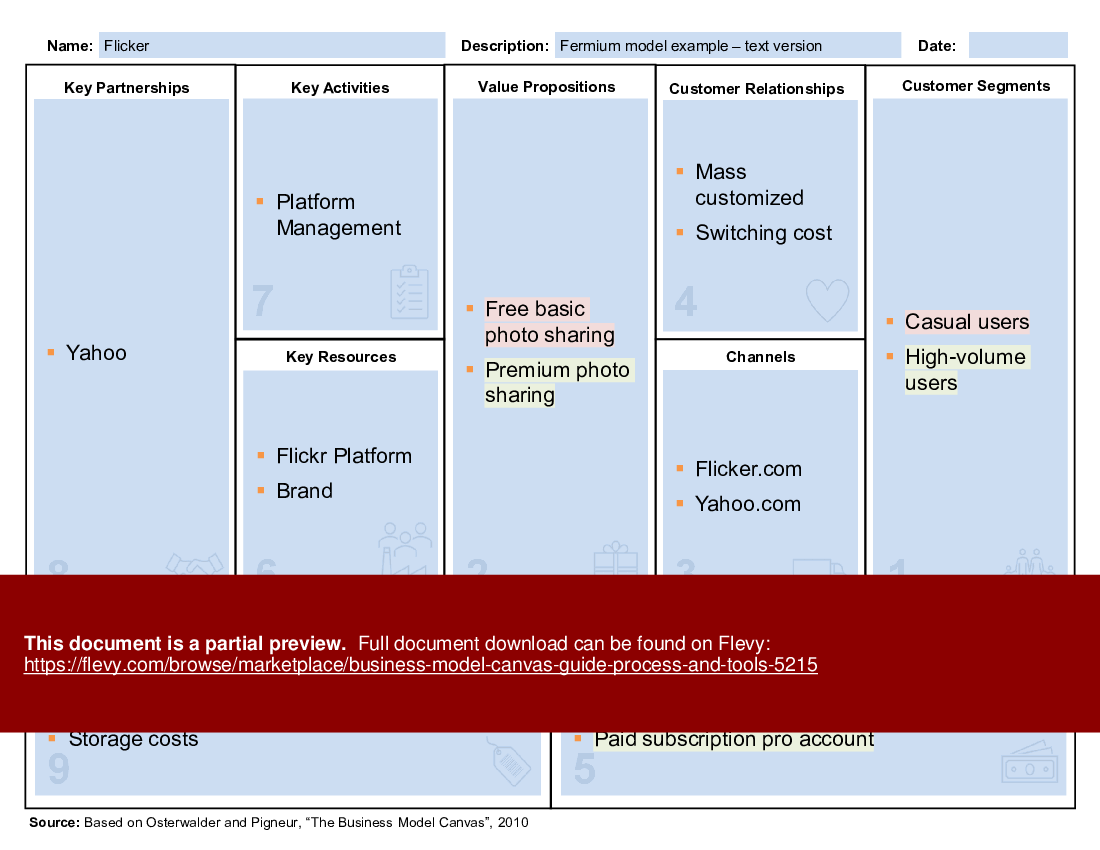
-Fermium Example ? sticky notes version
-Fermium model example ? text version
-Blank template
-Blank template with text holders
-Sticky notes and building block graphic
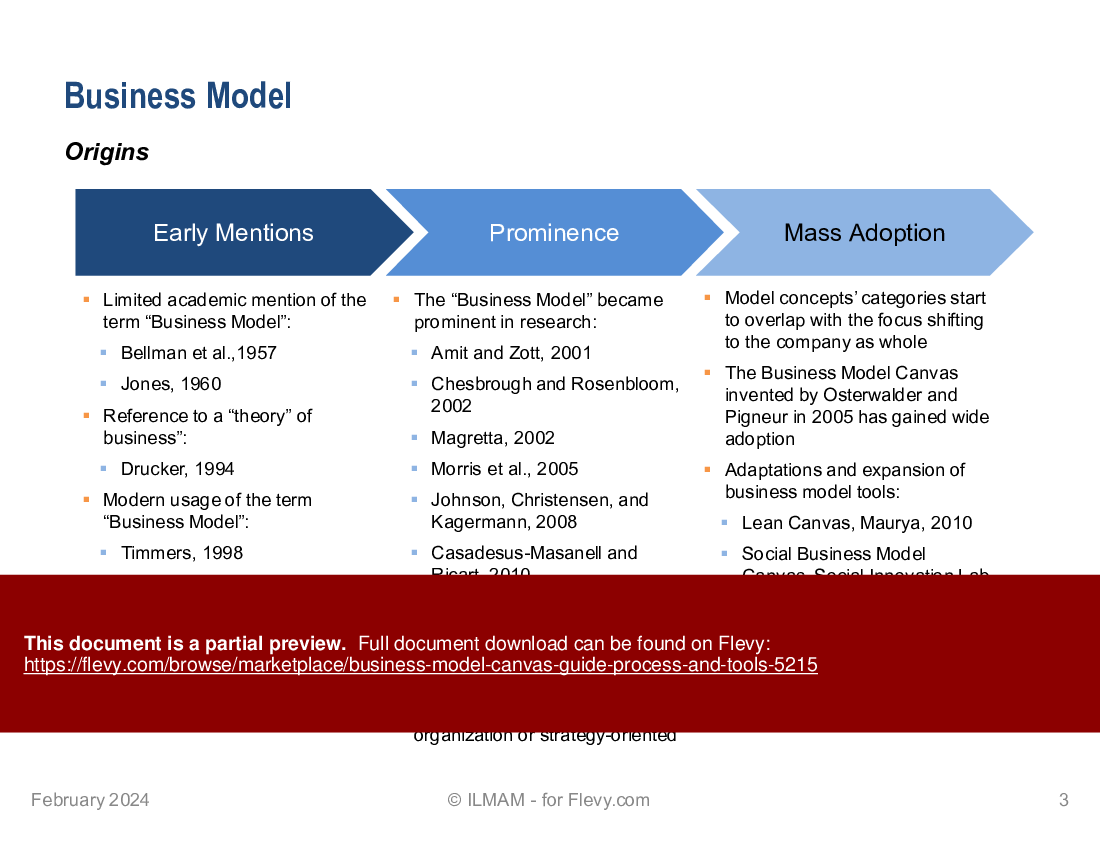
The PPT delves into the historical evolution of the term "Business Model" and its widespread adoption in modern business practices. It also explores the integration of the Business Model Canvas with Blue Ocean strategy for innovative value creation.
Got a question about the product? Email us at support@flevy.com or ask the author directly by using the "Ask the Author a Question" form. If you cannot view the preview above this document description, go here to view the large preview instead.
MARCUS OVERVIEW
This synopsis was written by Marcus [?] based on the analysis of the full 43-slide presentation.
Executive Summary
This presentation titled "Business Model Canvas: Guide, Process and Tools" is crafted in a McKinsey, Bain, or BCG-quality format (consulting-grade; not affiliated). It provides a comprehensive overview of the Business Model Canvas, detailing its origins, definitions, and its critical link to strategy analysis and development. Buyers will gain insights into the design stages, key components, and practical applications of the Business Model Canvas, enabling them to effectively describe, innovate, and implement business models tailored to their organizational needs.
Who This Is For and When to Use
• Corporate strategists and business development executives seeking to refine their business models
• Consultants and advisors working with clients on strategic planning and innovation
• Product managers and team leaders focused on aligning value propositions with customer needs
• Entrepreneurs and startup founders aiming to establish a clear business model from the outset
Best-fit moments to use this deck:
• During strategic planning sessions to align team objectives and initiatives
• When analyzing competitors’ business models to identify opportunities for differentiation
• In workshops focused on innovation and business model design
• For onboarding new executives to familiarize them with the company’s business model framework
Learning Objectives
• Define the Business Model Canvas and its relevance in strategic planning
• Build a comprehensive business model using the nine building blocks of the canvas
• Establish connections between business model components and organizational strategy
• Analyze and adapt existing business models to meet evolving market demands
• Create a value proposition that effectively addresses customer needs
• Develop a roadmap for implementing and managing the business model
Table of Contents
• Business Model – Origins, Definition and Link to Strategy (page 3)
• Business Model Canvas - Usage and Design Stages (page 9)
• Business Model Canvas - Conceptual Breakdown and Elements (page 13)
• Business Model Canvas - A Strategy Analysis and Development Tool (page 19)
• Business Model Canvas - Building Blocks Key Questions and Notes (page 24)
• Business Model Canvas - Sample, Template and Graphical Elements (page 42)
Primary Topics Covered
• Business Model Origins - The evolution of the term "business model" from limited academic mention to widespread adoption, highlighting key contributors and definitions.
• Business Model Canvas Usage - An overview of how the Business Model Canvas can be utilized for various applications including strategy development, performance tracking, and innovation.
• Design Stages of the Canvas - A structured approach to designing a business model, including mobilization, understanding, designing, implementing, and managing.
• Nine Building Blocks - Detailed exploration of the nine essential components of the Business Model Canvas, including customer segments, value propositions, and revenue streams.
• Linking to Strategy - How the Business Model Canvas serves as a bridge between business strategy and operational processes.
• SWOT Analysis Application - Utilizing SWOT analysis for each building block to facilitate structured discussions and strategic insights.
Deliverables, Templates, and Tools
• Business Model Canvas template for drafting and visualizing business models
• Value Proposition Canvas for aligning customer needs with business offerings
• SWOT analysis framework tailored for each building block of the canvas
• Sample business model examples to illustrate practical applications
• Graphical elements for brainstorming sessions using sticky notes
• Guidelines for conducting effective workshops on business model innovation
Slide Highlights
• Overview of the nine building blocks of the Business Model Canvas, visually represented for clarity.
• Detailed breakdown of the design stages, emphasizing the importance of each phase in the business model development process.
• Insights into the relationship between business models and strategy, illustrated with practical examples.
• Application of SWOT analysis to each building block, providing a structured approach to strategic discussions.
• Examples of successful business models, showcasing real-world applications of the canvas.
Potential Workshop Agenda
Business Model Design Workshop (90 minutes)
• Introduction to the Business Model Canvas and its components
• Group activity: Drafting initial thoughts using the canvas template
• Discussion on aligning business models with strategic objectives
SWOT Analysis Session (60 minutes)
• Breakout groups to conduct SWOT analysis on selected business model components
• Sharing insights and identifying key strategic opportunities
Value Proposition Development (90 minutes)
• Workshop on creating effective value propositions using the Value Proposition Canvas
• Group presentations to refine and align propositions with customer needs
Customization Guidance
• Tailor the Business Model Canvas template to reflect specific industry terminology and metrics.
• Adapt the design stages to fit the unique needs of your organization or project.
• Incorporate company-specific examples into the SWOT analysis for relevance.
Secondary Topics Covered
• The evolution of business model concepts and their academic origins
• The role of customer insights in shaping business models
• Techniques for effective stakeholder engagement during the design process
• The impact of market trends on business model innovation
• Strategies for integrating new technologies into existing business models
Topic FAQ
What are the nine building blocks of the Business Model Canvas?
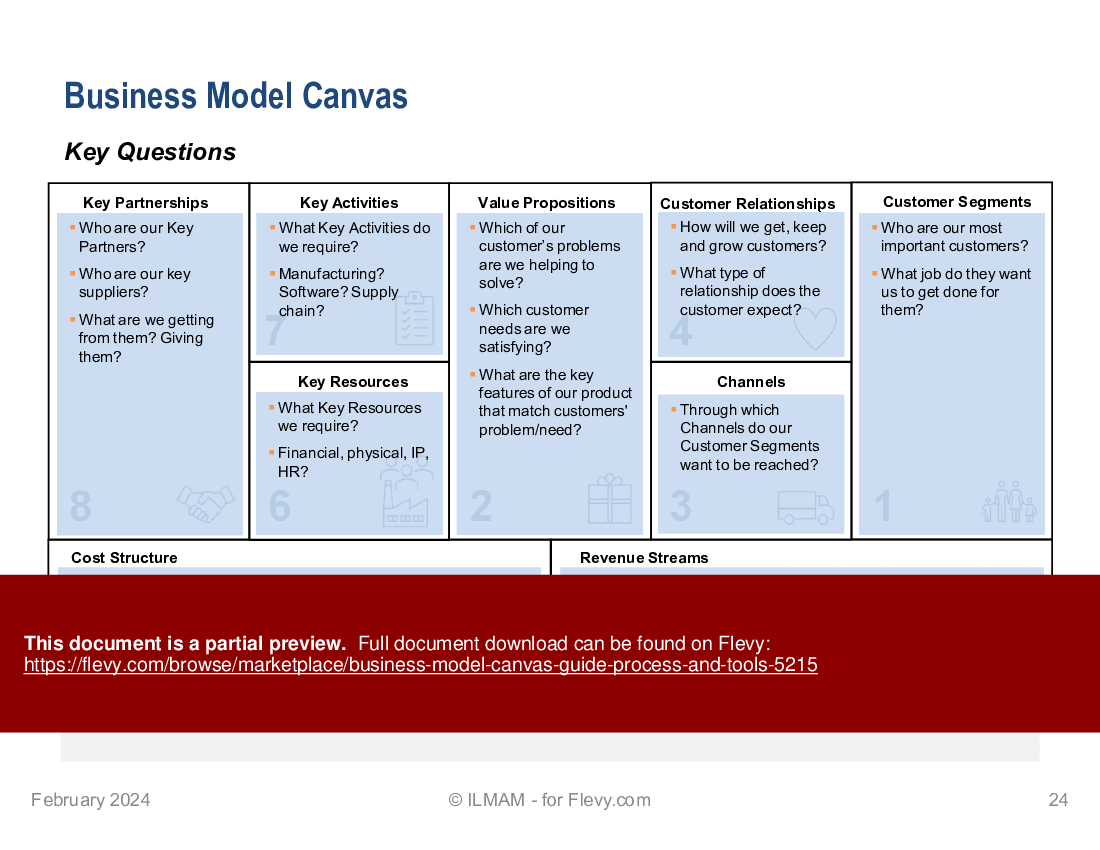
The nine building blocks are Key Partnerships, Key Activities, Key Resources, Value Propositions, Customer Relationships, Channels, Customer Segments, Cost Structure, and Revenue Streams. These elements together describe how a business creates, delivers, and captures value and are presented as the canvas’s nine building blocks.
How can I apply SWOT analysis to a Business Model Canvas exercise?
Apply SWOT analysis to each canvas building block to identify strengths, weaknesses, opportunities, and threats for components like channels or revenue streams. The Business Model Canvas: Guide, Process and Tools includes a SWOT analysis framework tailored for each building block to structure those discussions and outputs.
What are the typical design stages when developing a business model using the canvas?
The structured stages are mobilization, understanding, designing, implementing, and managing. These stages guide teams from preparation through execution and ongoing oversight. The Business Model Canvas: Guide, Process and Tools outlines these 5 design stages for workshop and project use.
How does the Business Model Canvas link to strategic planning and execution?
The canvas serves as a visual bridge between strategic objectives and operational components, showing how value propositions, customer segments, and revenue streams align with broader strategy. The deck also explains links to business planning and integration with Blue Ocean strategy for innovation and strategic clarity.
What should I look for in a Business Model Canvas template for consulting workshops?
Seek templates that include blank canvas layouts, versions with text holders, graphical sticky-note elements, sample model examples, and workshop guidance such as proposed agendas and breakout activities. Business Model Canvas: Guide, Process and Tools provides these specific assets including blank templates and sticky-note graphics.
How long should workshop sessions be when using the Business Model Canvas?
Typical session lengths in the provided agendas include a 90-minute Business Model Design Workshop, a 60-minute SWOT Analysis Session, and a 90-minute Value Proposition Development session. These durations support focused drafting, breakout analysis, and value-proposition refinement with small groups.
I need to pivot my startup’s model after poor product-market fit—what framework elements should I use?
Use the Business Model Canvas to map current assumptions, apply the Value Proposition Canvas to re-align product benefits with customer jobs, and run SWOT analysis on impacted blocks to identify strategic changes. The package offers templates and workshop agendas to support those activities, including the Value Proposition Canvas.
Are paid Business Model Canvas templates worth buying compared to free resources?
Paid templates can bundle instructional content, sample models, workshop agendas, graphical elements, and tailored SWOT frameworks that accelerate structured sessions. Business Model Canvas: Guide, Process and Tools explicitly includes these items—templates, sample examples, graphical sticky-note elements, and workshop guidelines.
Document FAQ
These are questions addressed within this presentation.
What is the Business Model Canvas?
The Business Model Canvas is a strategic management tool that visually outlines the key components of a business model, enabling organizations to design, analyze, and innovate effectively.
How can the Business Model Canvas be applied in strategic planning?
It serves as a framework for aligning business strategies with operational processes, allowing teams to visualize and discuss the interdependencies of different business components.
What are the nine building blocks of the Business Model Canvas?
The nine building blocks include Key Partnerships, Key Activities, Key Resources, Value Propositions, Customer Relationships, Channels, Customer Segments, Cost Structure, and Revenue Streams.
How does the Business Model Canvas link to strategy?
The canvas acts as a bridge between a company's strategic objectives and its operational execution, ensuring that all components of the business model are aligned with overarching goals.
Can the Business Model Canvas be customized?
Yes, organizations can tailor the canvas to reflect specific industry needs, terminology, and metrics relevant to their business context.
What is the Value Proposition Canvas?
The Value Proposition Canvas is a tool used to ensure that a product or service meets the needs of customers by aligning value propositions with customer segments.
How can SWOT analysis enhance the use of the Business Model Canvas?
Conducting a SWOT analysis for each building block allows teams to identify strengths, weaknesses, opportunities, and threats, facilitating structured discussions and strategic insights.
What are some common pitfalls when using the Business Model Canvas?
Common pitfalls include overcomplicating the model, failing to adapt to market changes, and neglecting stakeholder input during the design process.
How can workshops be structured around the Business Model Canvas?
Workshops can focus on different aspects of the canvas, such as design, analysis, and innovation, using group activities and discussions to foster collaboration and creativity.
Glossary
• Business Model - A framework outlining how a company creates, delivers, and captures value.
• Business Model Canvas - A visual tool for developing and analyzing business models through nine key components.
• Value Proposition - The unique value a product or service offers to customers, addressing their needs and problems.
• Customer Segments - The different groups of people or organizations a business aims to reach and serve.
• Key Activities - The essential actions a company must take to operate successfully and deliver its value proposition.
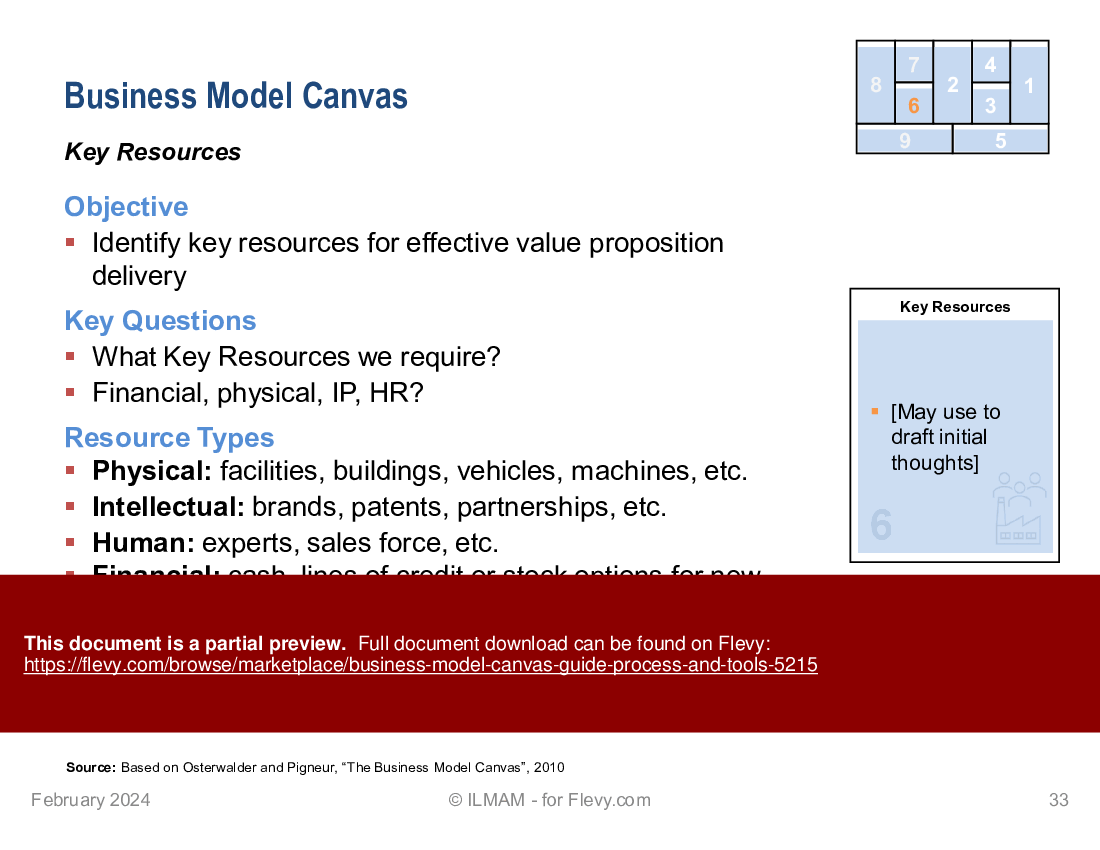
• Key Resources - The critical assets required to deliver the value proposition and operate the business.
• Key Partnerships - The network of suppliers and partners that help the business model function effectively.
• Revenue Streams - The various sources of income generated by the business model.
• Cost Structure - The total costs incurred to operate the business model.
• SWOT Analysis - A strategic planning tool used to identify strengths, weaknesses, opportunities, and threats related to a business.
• Channels - The means through which a company delivers its value proposition to customers.
• Customer Relationships - The types of relationships a company establishes with its customer segments.
• Market Trends - The general direction in which a market is developing or changing.
• Innovation - The process of translating an idea or invention into a good or service that creates value.
• Strategic Planning - The process of defining a business's direction and making decisions on allocating resources to pursue that direction.
• Business Model Patterns - Common configurations of business models that can be identified and replicated across different industries.
• Foresight - The ability to anticipate and prepare for future market trends and changes.
• Stakeholder Engagement - The process of involving individuals or groups who have an interest in the business's activities and outcomes.
• Operational Execution - The implementation of strategies and plans to achieve business objectives.
• Governance - The framework of rules and practices by which a business is directed and controlled.
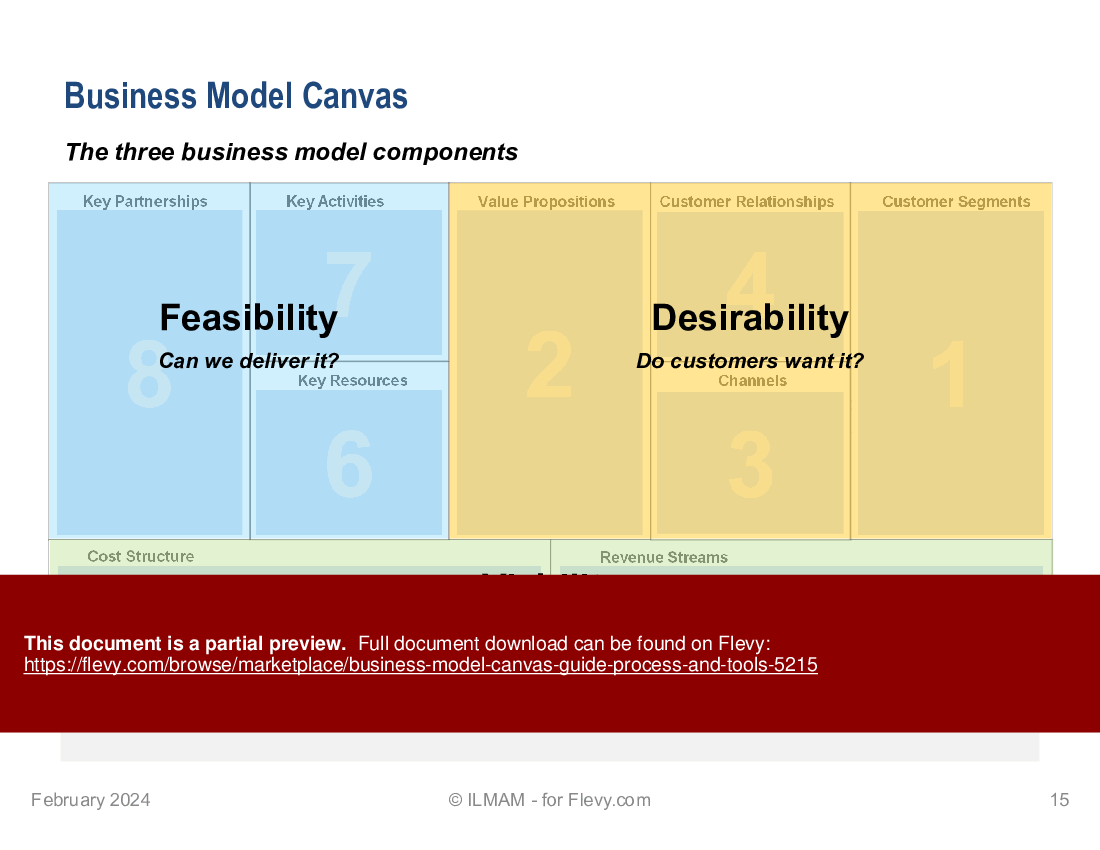
This PPT slide provides an overview of the Business Model Canvas, focusing on 3 components: Feasibility, Desirability, and Viability. Feasibility, in the top left quadrant, addresses operational capabilities with the question, "Can we deliver it?" Key Resources and Key Activities sections detail essential inputs and processes for implementation. Desirability, in the top right quadrant, asks, "Do customers want it?" highlighting the alignment of value propositions with customer needs, explored through Customer Relationships and Customer Segments. Viability, located in the bottom center, poses the question, "What is it worth?" examining financial aspects through Cost Structure and Revenue Streams. This framework integrates operational, customer, and financial perspectives for evaluating business model effectiveness.
The Business Model Canvas outlines core elements of a business model: Key Partnerships, Key Activities, Key Resources, Value Propositions, Customer Relationships, Customer Segments, Channels, Cost Structure, and Revenue Streams. It serves as a foundational tool for visualizing business strategies. Surrounding the canvas are 3 analytical areas: Competitive Analysis, Market Analysis, and Foresight. Competitive Analysis evaluates industry forces, including suppliers, stakeholders, competitors, new entrants, and substitutes, to identify market challenges and opportunities. Market Analysis focuses on market segments, demand, switching costs, and revenue attractiveness, aiding businesses in assessing their positioning and growth potential. Foresight highlights trends impacting the business environment, such as technological, regulatory, social, cultural, and socioeconomic factors, enabling companies to adapt their strategies effectively.
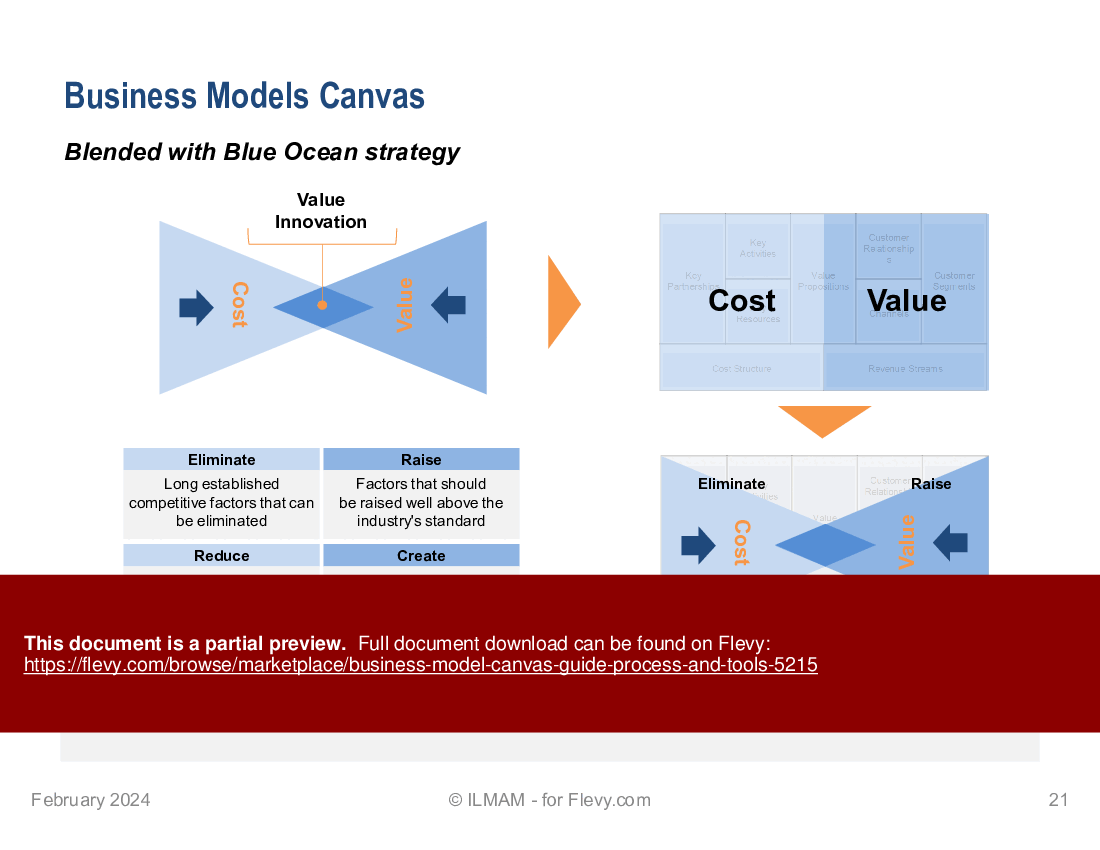
This PPT slide synthesizes the Business Model Canvas with the Blue Ocean strategy, focusing on value innovation. It illustrates a dual emphasis on cost and value, enabling differentiation through effective balance. Four strategic actions are outlined: Eliminate (removing non-beneficial factors), Raise (enhancing factors above industry standards), Reduce (minimizing elements below the norm), and Create (developing new market factors). This structure integrates into the Business Model Canvas, prompting companies to rethink value propositions and operational strategies. The Blue Ocean strategy complements the Business Model Canvas, offering a structured method for innovation and differentiation in a competitive marketplace.
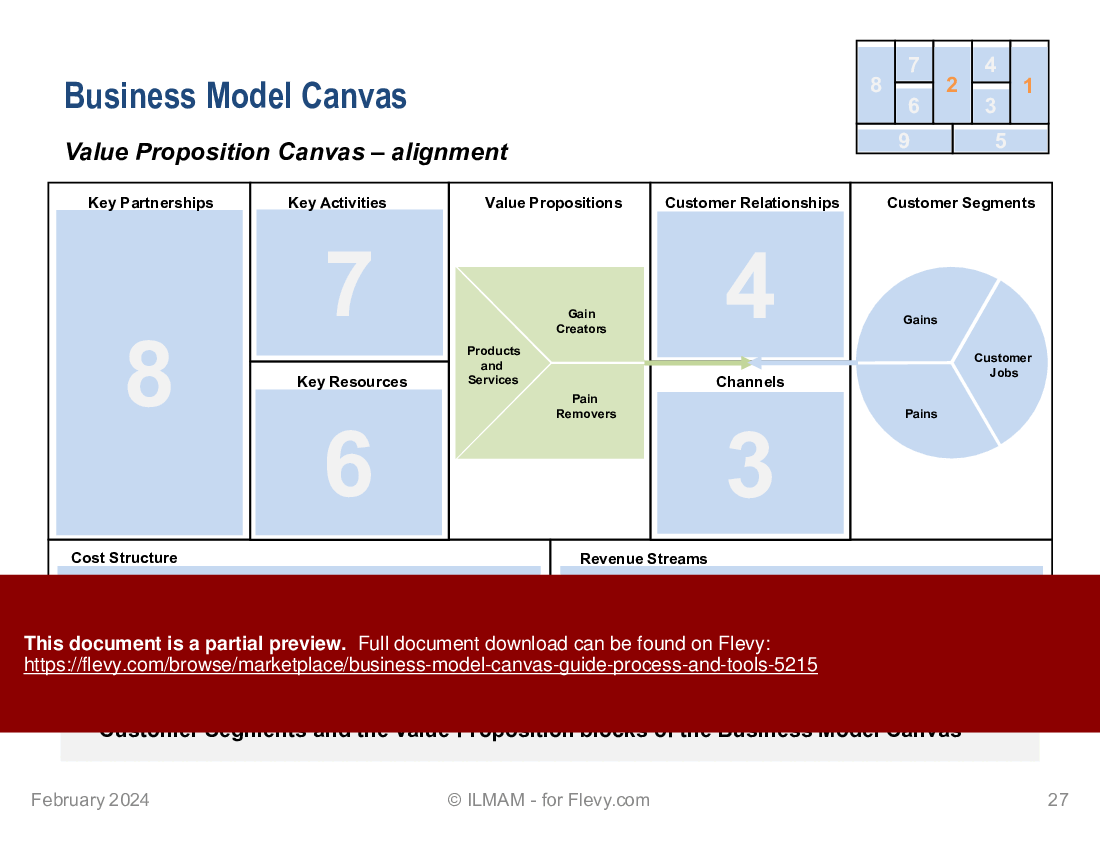
The Value Proposition Canvas aligns products and services with customer needs through key components: Gain Creators, Pain Removers, Customer Jobs, Gains, and Pains. Gain Creators focus on benefits offered, while Pain Removers address customer challenges, enhancing satisfaction and loyalty. Customer Jobs represent tasks customers aim to accomplish, guiding businesses to tailor offerings effectively. Gains denote positive outcomes customers seek, and Pains highlight obstacles faced. This systematic approach visualizes connections between offerings and customer needs, facilitating strategic discussions among teams and stakeholders. The canvas serves as a foundational tool for refining value propositions and ensuring alignment with market demands, fostering a customer-centric mindset essential for growth and innovation.
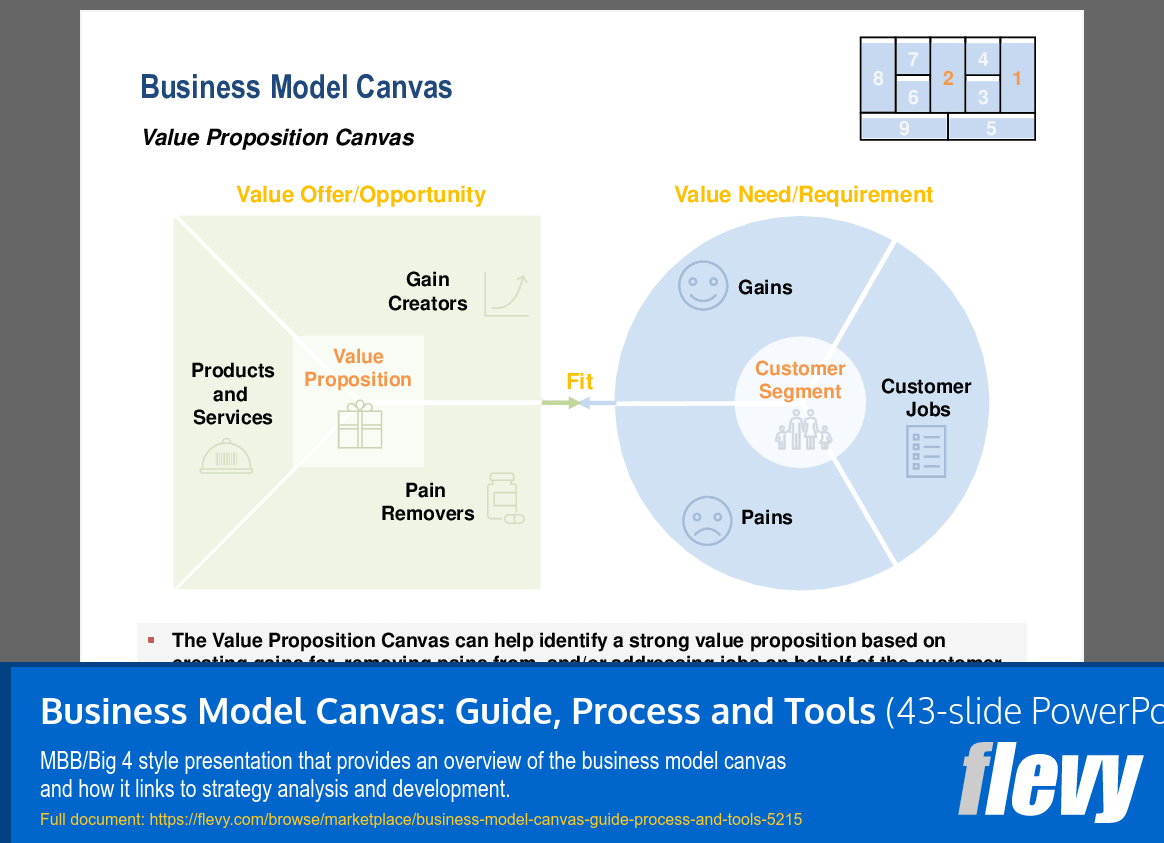
The Value Proposition Canvas is a strategic tool for aligning offerings with customer needs, divided into 2 sections: Value Offer/Opportunity and Value Need/Requirement. The Value Offer quadrant includes "Gain Creators," which enhance customer satisfaction, and "Pain Removers," which alleviate customer challenges. The central "Value Proposition" box emphasizes the importance of a well-defined offering. The Value Need quadrant features "Customer Segment," representing the target audience, along with "Gains" and "Pains," reflecting desired outcomes and challenges. This framework illustrates the connection between value propositions and customer requirements, highlighting the necessity of addressing both gains and pains to create a strong value proposition.
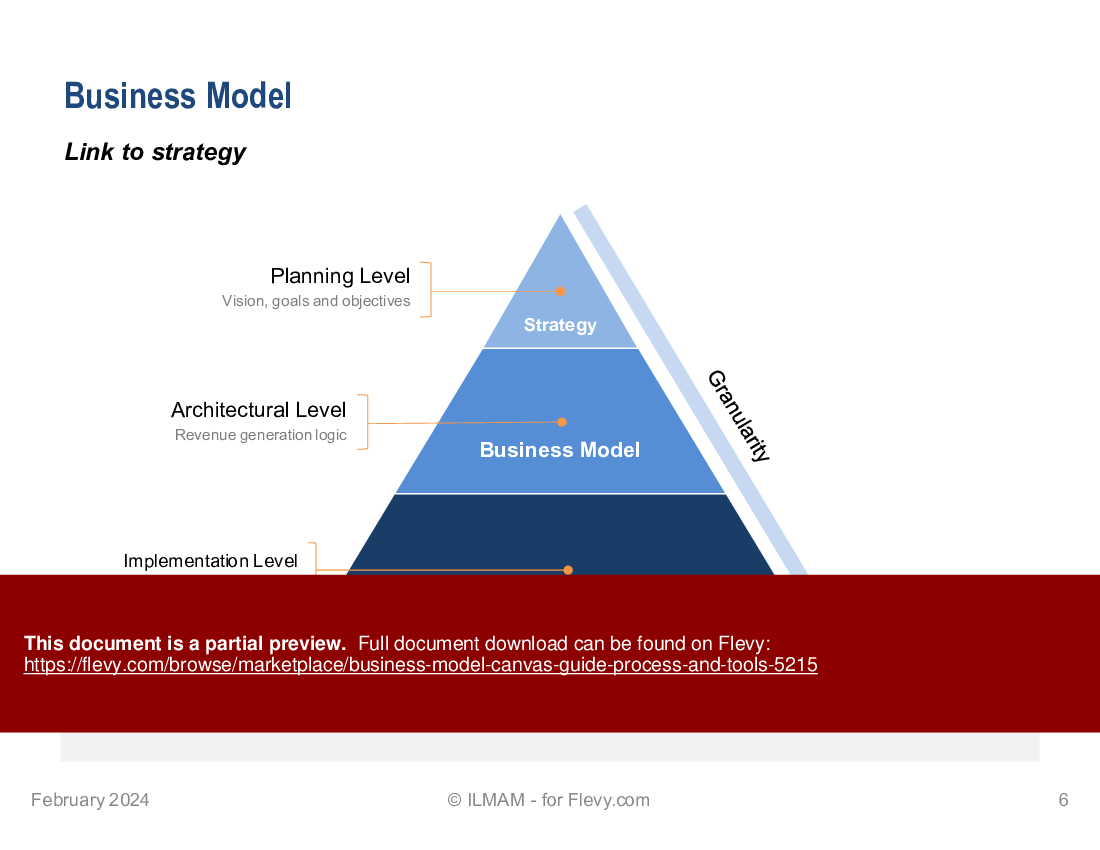
This PPT slide illustrates a structured framework connecting business models, strategy, and business processes in a pyramid format. At the top, the "Planning Level" encompasses the organization's vision, goals, and objectives, forming the basis for strategic direction. The "Architectural Level" focuses on revenue generation logic, linking value creation to overarching strategy. The "Business Model" serves as a bridge between strategy and operational execution, detailing how value is delivered to customers. At the base, the "Implementation Level" outlines the organization and workflow necessary to execute the business model, translating strategic objectives into actionable processes. The gradient of granularity indicates a shift from broad strategic goals to specific operational tasks, reinforcing the essential link between business models, strategy, and processes for effective implementation and organizational success.
The business model design process consists of 5 key phases: Mobilize, Understand, Design, Implement, and Manage. In the Mobilize phase, project objectives are framed, preliminary business ideas are tested, and a team is assembled. The Understand phase involves researching target markets, scanning the environment, and interviewing experts. The Design phase focuses on generating and testing viable business model options through brainstorming and prototyping, emphasizing cross-company collaboration. The Implement phase executes the business model prototype, requiring effective communication and stakeholder involvement. Finally, the Manage phase adapts the model based on market reactions, emphasizing continuous assessment and managing synergies while avoiding common pitfalls like overestimating initial ideas.
This PPT slide presents a framework for analyzing cost structures within a business model canvas, focusing on effective value capture. Key questions guide the identification of significant costs, distinguishing between fixed and variable costs, which are essential for understanding financial dynamics. The analysis contrasts 2 main approaches: cost-driven, which emphasizes low prices and automation for operational efficiencies, and value-driven, which prioritizes creating value through investments in quality or customer experience. Characteristics of cost structures include fixed costs like salaries and rents, and variable costs that fluctuate with production levels. The slide highlights economies of scale and economies of scope, illustrating how bulk purchasing and larger operational scales can reduce costs.
This PPT slide outlines a business model consisting of 3 components: strategic, operational, and infrastructural elements. The "Mission Objectives Goals" form the foundation for the "Business Strategy," indicating that strategic direction is driven by defined goals. The "Business Model" serves as a framework for how a company creates, delivers, and captures value, translating strategy into actionable plans. The "Business Process" emphasizes the importance of operationalizing the business model for effective execution. The "Business System" highlights external factors like customers, competitors, partners, and trends that influence the business model, indicating the need for a comprehensive understanding of the external environment. The two-way relationship between these elements shows that the business model informs operations while being shaped by external dynamics.
The Business Model Canvas categorizes actions into distinct areas: "Describe," "Discuss," "Challenge," "Improve," "Innovate," "Design," "Choose," "Pivot," and "Invent." Each term represents a specific function for organizations refining or reinventing operational strategies. "Describe" and "Discuss" focus on articulating existing models and evaluating their effectiveness. "Challenge" and "Improve" encourage critical assessment of current practices. "Design" and "Choose" emphasize creative development of new business models, while "Innovate" and "Invent" promote breakthrough solutions. "Pivot" highlights adaptability to changing market conditions. This versatile canvas supports various purposes, from initial discussions to significant strategic shifts, aligning strategic goals with practical applications.
Source: Best Practices in Business Model Canvas, Business Model Design PowerPoint Slides: Business Model Canvas: Guide, Process and Tools PowerPoint (PPTX) Presentation Slide Deck, ILMAM - Strategy & Management Consulting
ILMAM is a strategy and management consulting provider that specializes in:
• Strategic management, including strategic planning and performance management
• Strategy enablers, such as key business processes and governance
Select top quality guides and tools are offered through to enable you to perform work at your company or support your clients effectively and
... [read more] efficiently.
Since 2012, we have provided business templates to over 10,000 businesses and organizations of all sizes, from startups and small businesses to the Fortune 100, in over 130 countries.
Read Customer Testimonials
"Flevy is now a part of my business routine. I visit Flevy at least 3 times each month.
Flevy has become my preferred learning source, because what it provides is practical, current, and useful in this era where the business world is being rewritten.
many challenges and there is the need to make the right decisions in a short time, with so much scattered information, we are fortunate to have Flevy. Flevy investigates, selects, and puts at our disposal the best of the best to help us be successful in our work.
"
– Omar Hernán Montes Parra, CEO at Quantum SFE
"I am extremely grateful for the proactiveness and eagerness to help and I would gladly recommend the Flevy team if you are looking for data and toolkits to help you work through business solutions."
– Trevor Booth, Partner, Fast Forward Consulting
"[Flevy] produces some great work that has been/continues to be of immense help not only to myself, but as I seek to provide professional services to my clients, it gives me a large "tool box" of resources that are critical to provide them with the quality of service and outcomes they are expecting."
– Royston Knowles, Executive with 50+ Years of Board Level Experience
"I have used Flevy services for a number of years and have never, ever been disappointed. As a matter of fact, David and his team continue, time after time, to impress me with their willingness to assist and in the real sense of the word. I have concluded in fact
that it is not at all just a repository of documents/resources but, in the way that David and his team manage the firm, it is like dealing with consultants always ready to assist, advise and direct you to what you really need, and they always get it right.
I am an international hospitality accomplished senior executive who has worked and lived during the past 35 years in 23 countries in 5 continents and I can humbly say that I know what customer service is, trust me.
Aside from the great and professional service that Flevy's team provide, their wide variety of material is of utmost great quality, professionally put together and most current.
Well done Flevy, keep up the great work and I look forward to continue working with you in the future and to recommend you to a variety of colleagues around the world.
"
– Roberto Pelliccia, Senior Executive in International Hospitality
"I like your product. I'm frequently designing PowerPoint presentations for my company and your product has given me so many great ideas on the use of charts, layouts, tools, and frameworks. I really think the templates are a valuable asset to the job."
– Roberto Fuentes Martinez, Senior Executive Director at Technology Transformation Advisory
"As a small business owner, the resource material available from FlevyPro has proven to be invaluable. The ability to search for material on demand based our project events and client requirements was great for me and proved very beneficial to my clients. Importantly, being able to easily edit and tailor
the material for specific purposes helped us to make presentations, knowledge sharing, and toolkit development, which formed part of the overall program collateral. While FlevyPro contains resource material that any consultancy, project or delivery firm must have, it is an essential part of a small firm or independent consultant's toolbox.
"
– Michael Duff, Managing Director at Change Strategy (UK)
"FlevyPro provides business frameworks from many of the global giants in management consulting that allow you to provide best in class solutions for your clients."
– David Harris, Managing Director at Futures Strategy

"I have found Flevy to be an amazing resource and library of useful presentations for lean sigma, change management and so many other topics. This has reduced the time I need to spend on preparing for my performance consultation. The library is easily accessible and updates are regularly provided. A wealth of great information."

– Cynthia Howard RN, PhD, Executive Coach at Ei Leadership
Save with Bundles
This document is available as part of the following discounted bundle(s):
Download our free compilation of 50+ Strategy & Transformation slides and templates. Frameworks include McKinsey 7-S, Balanced Scorecard, Disruptive Innovation, BCG Curve, and many more.